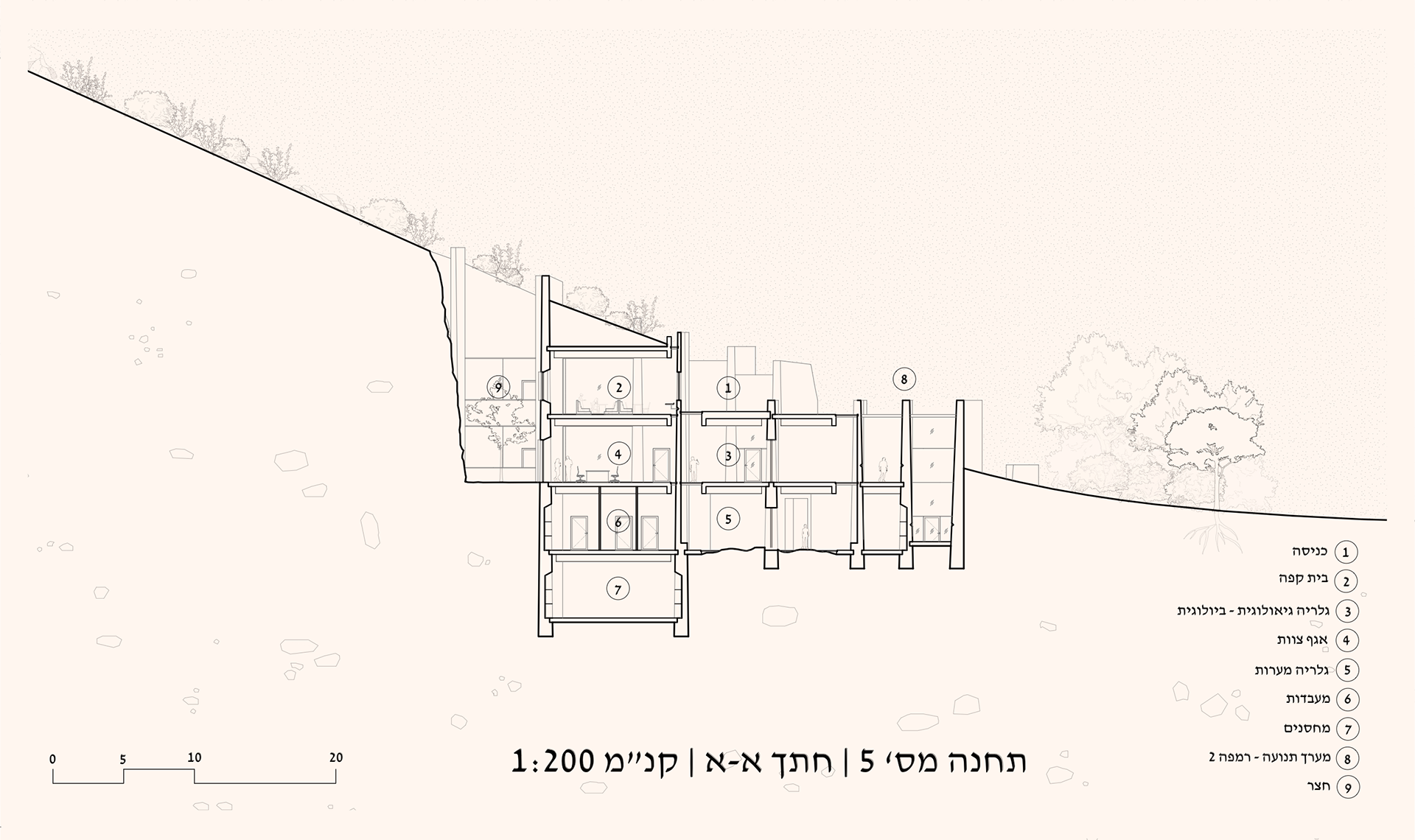
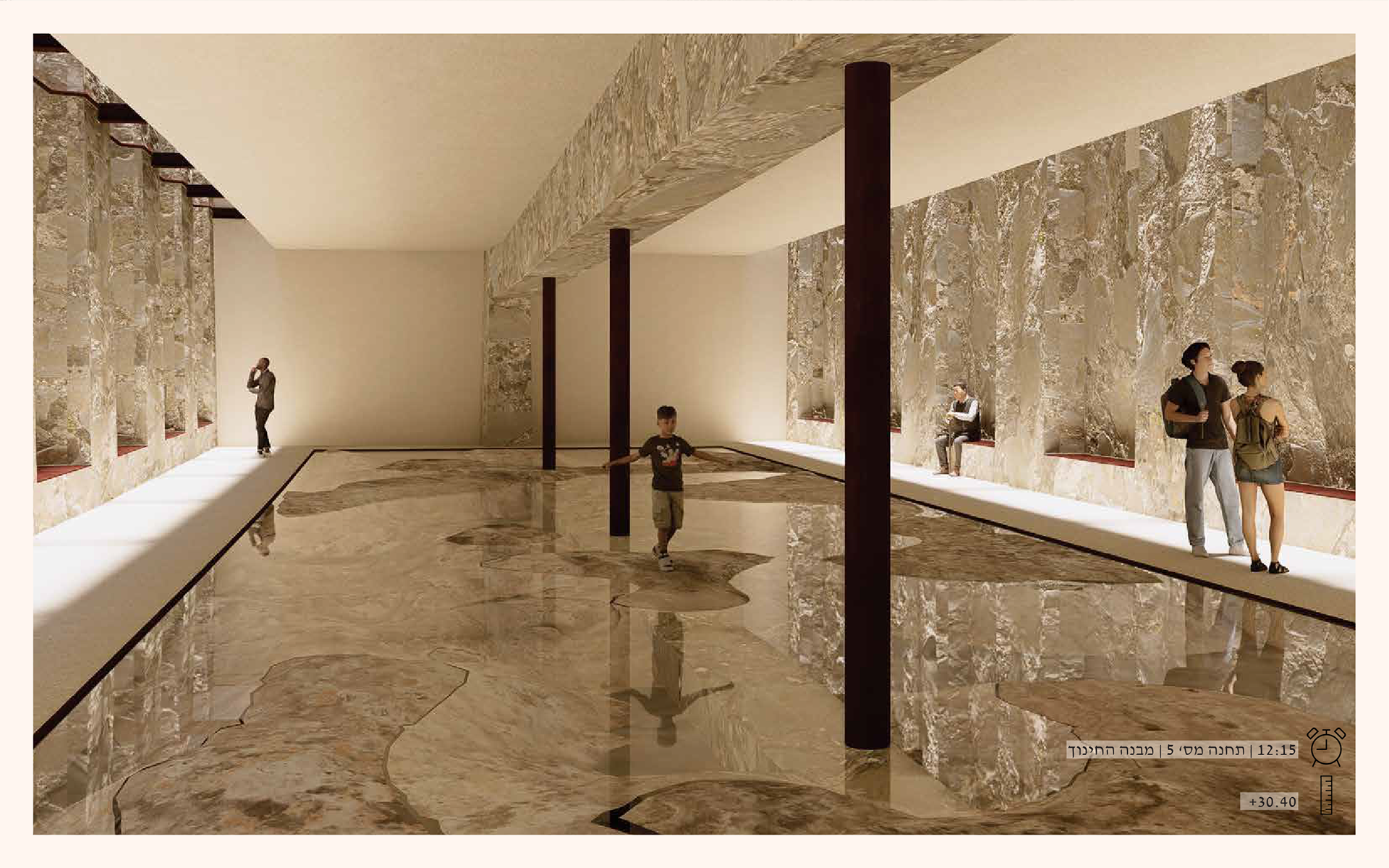
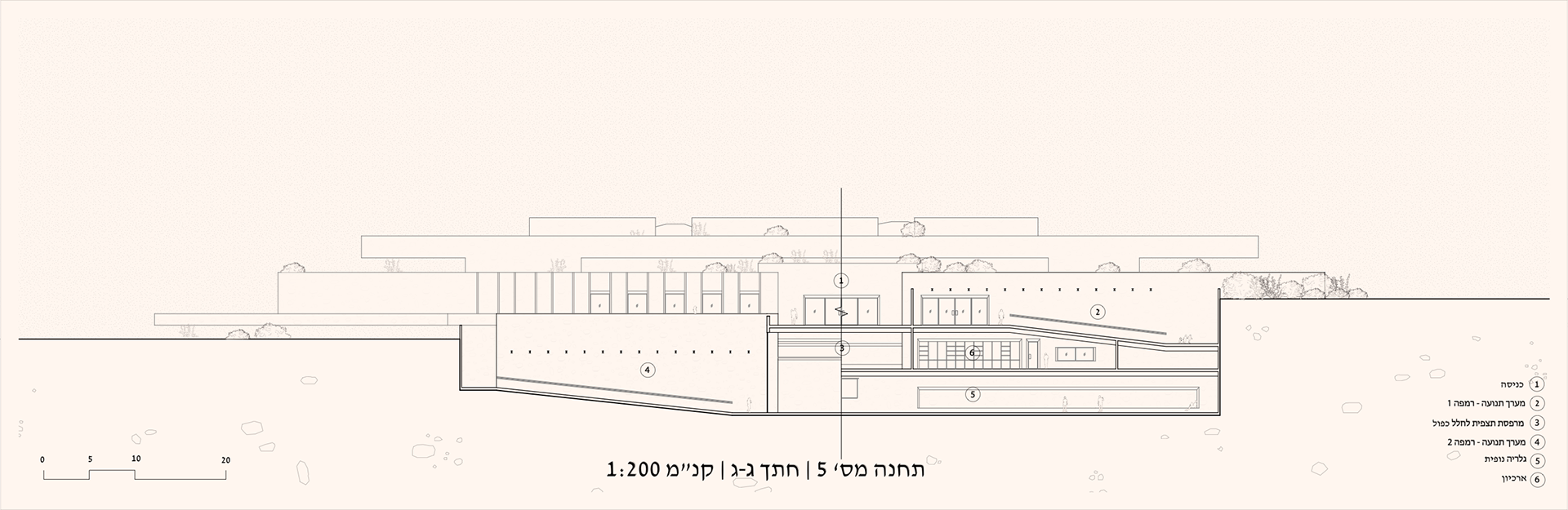
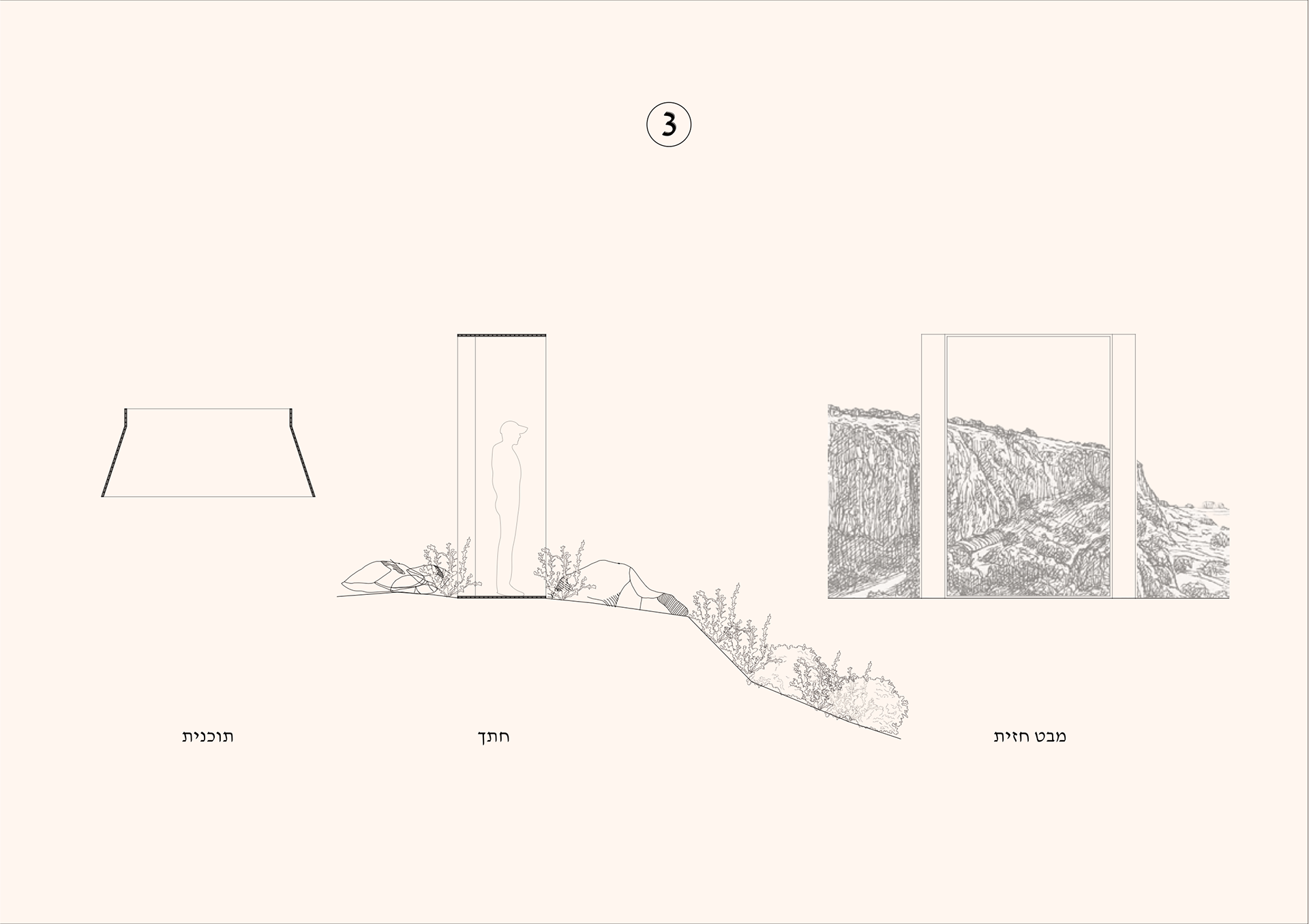
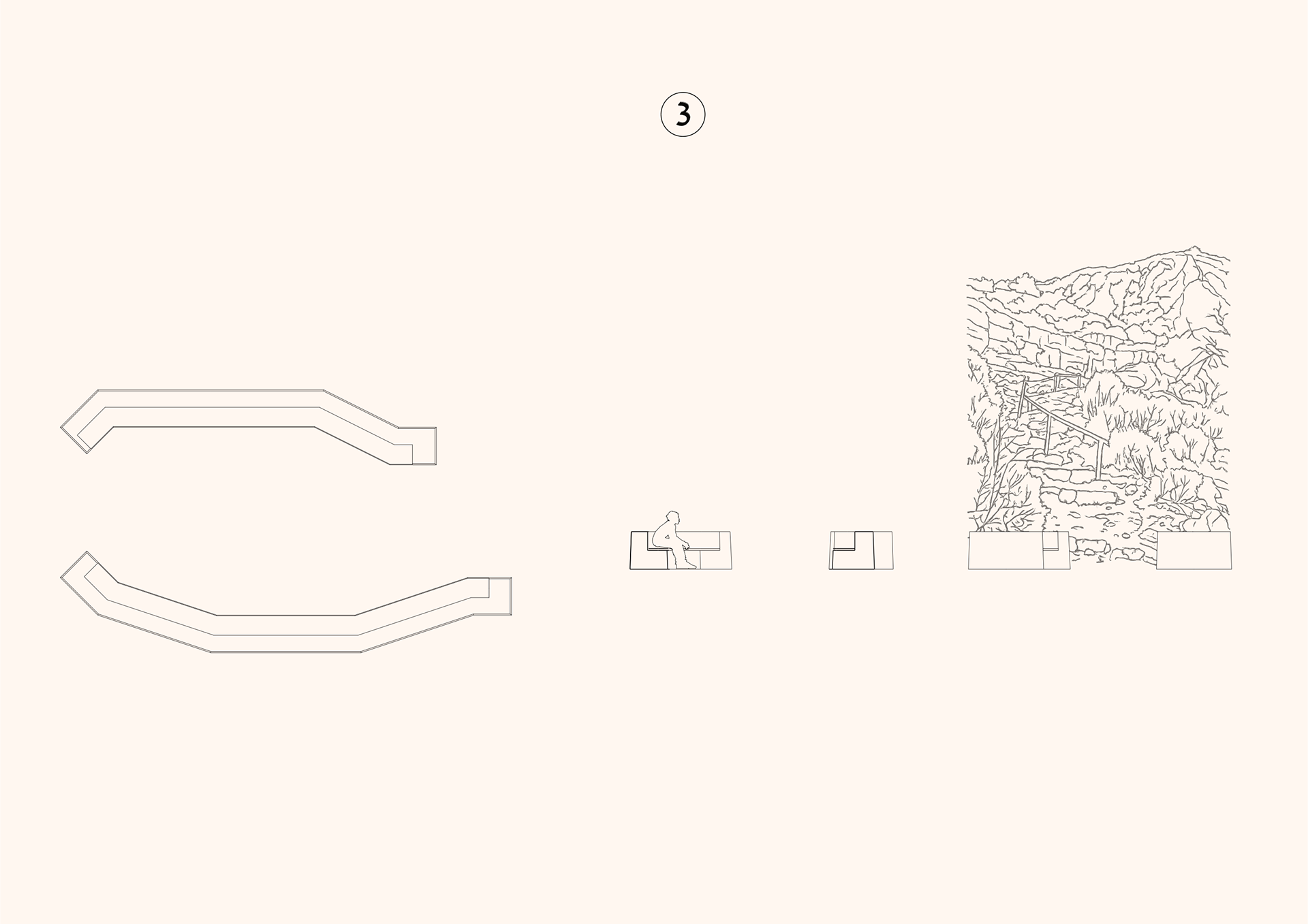
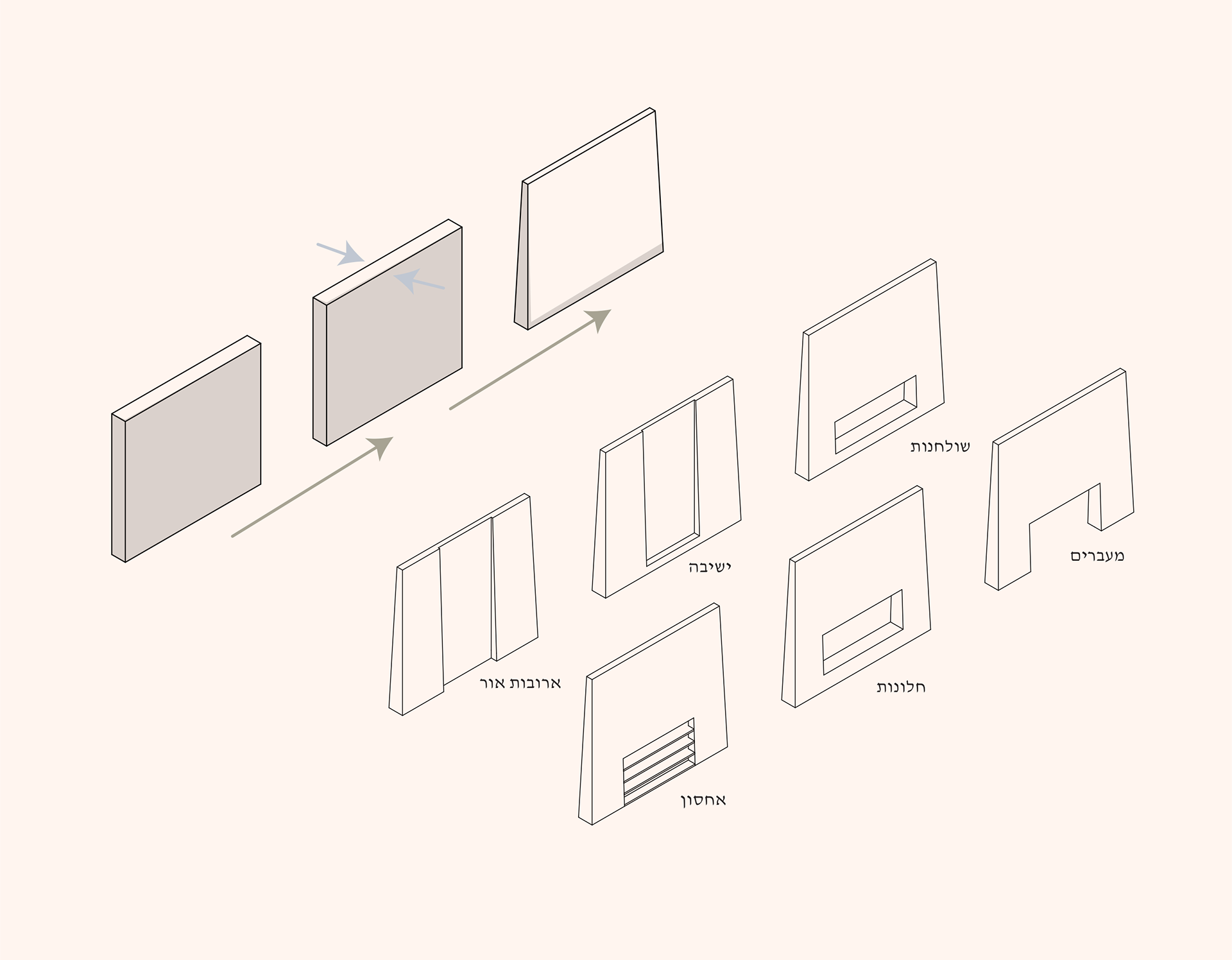
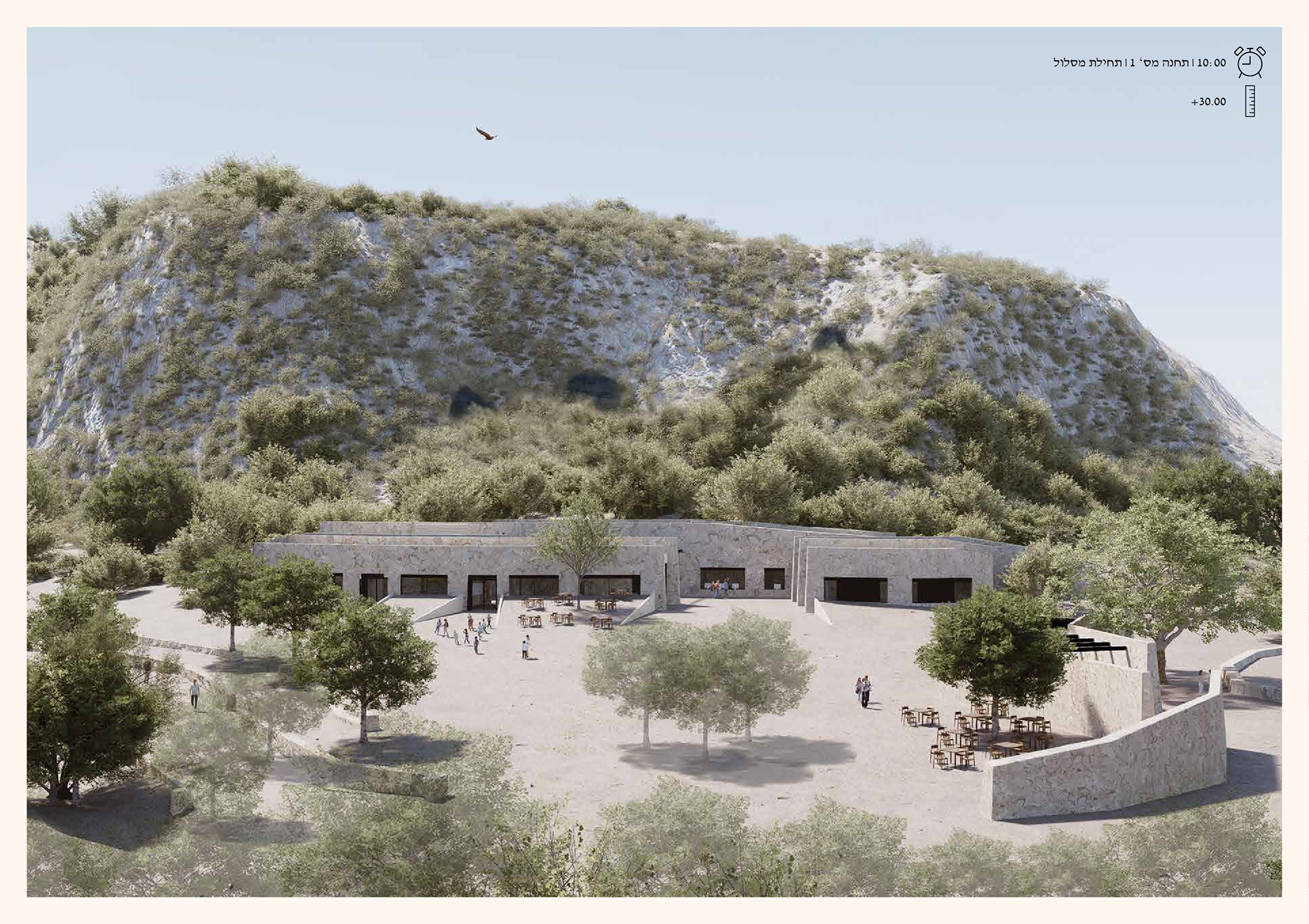
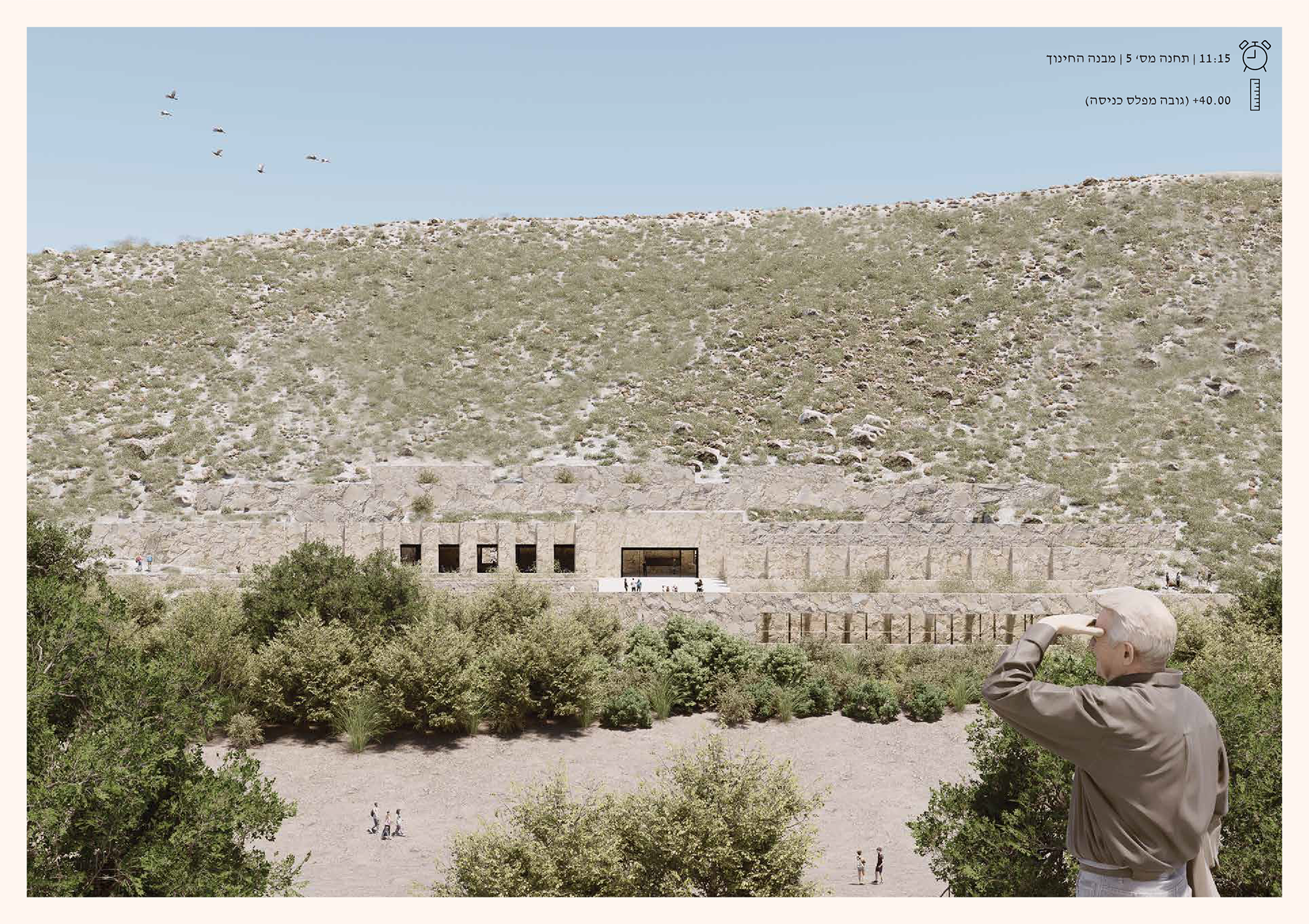
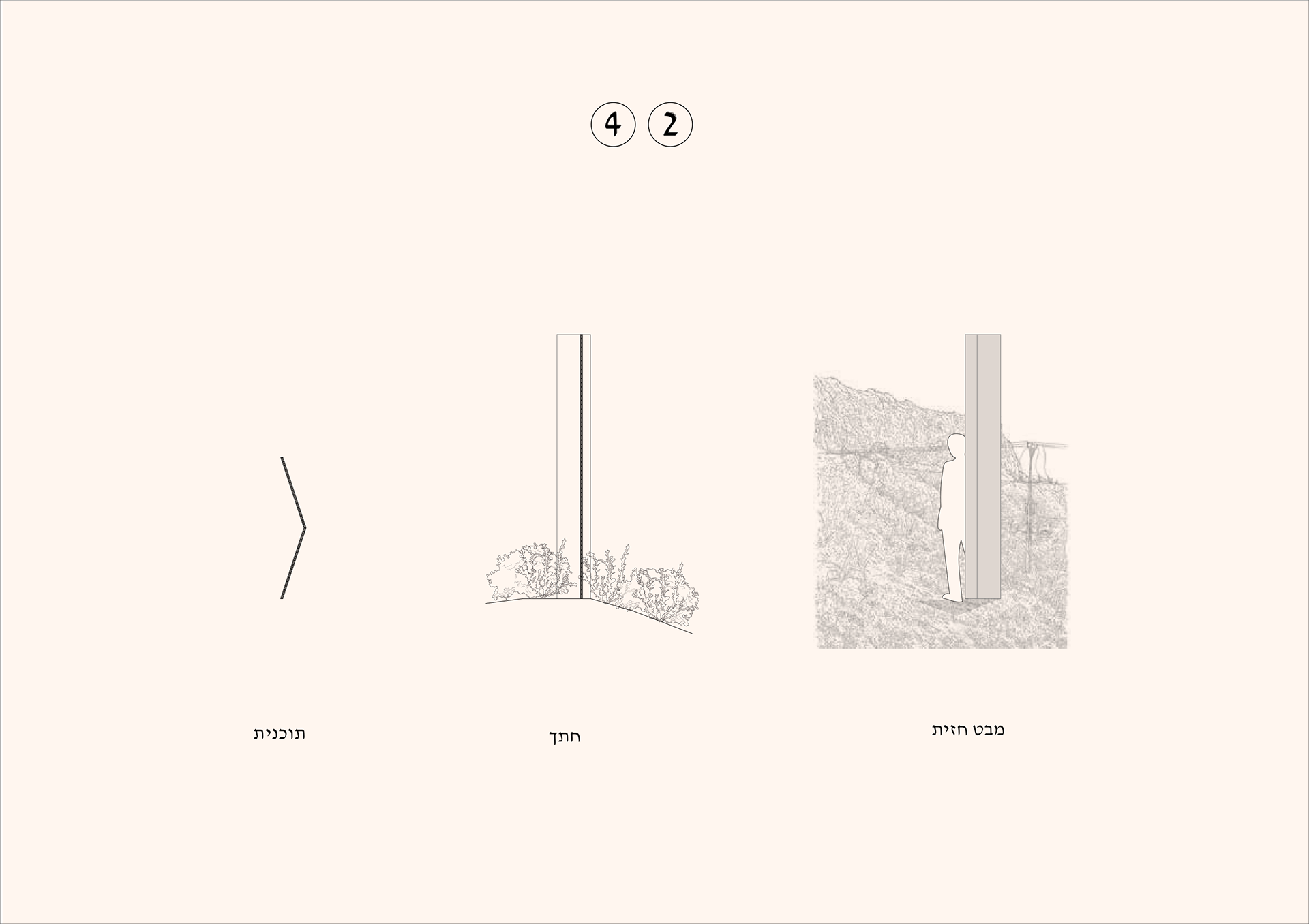
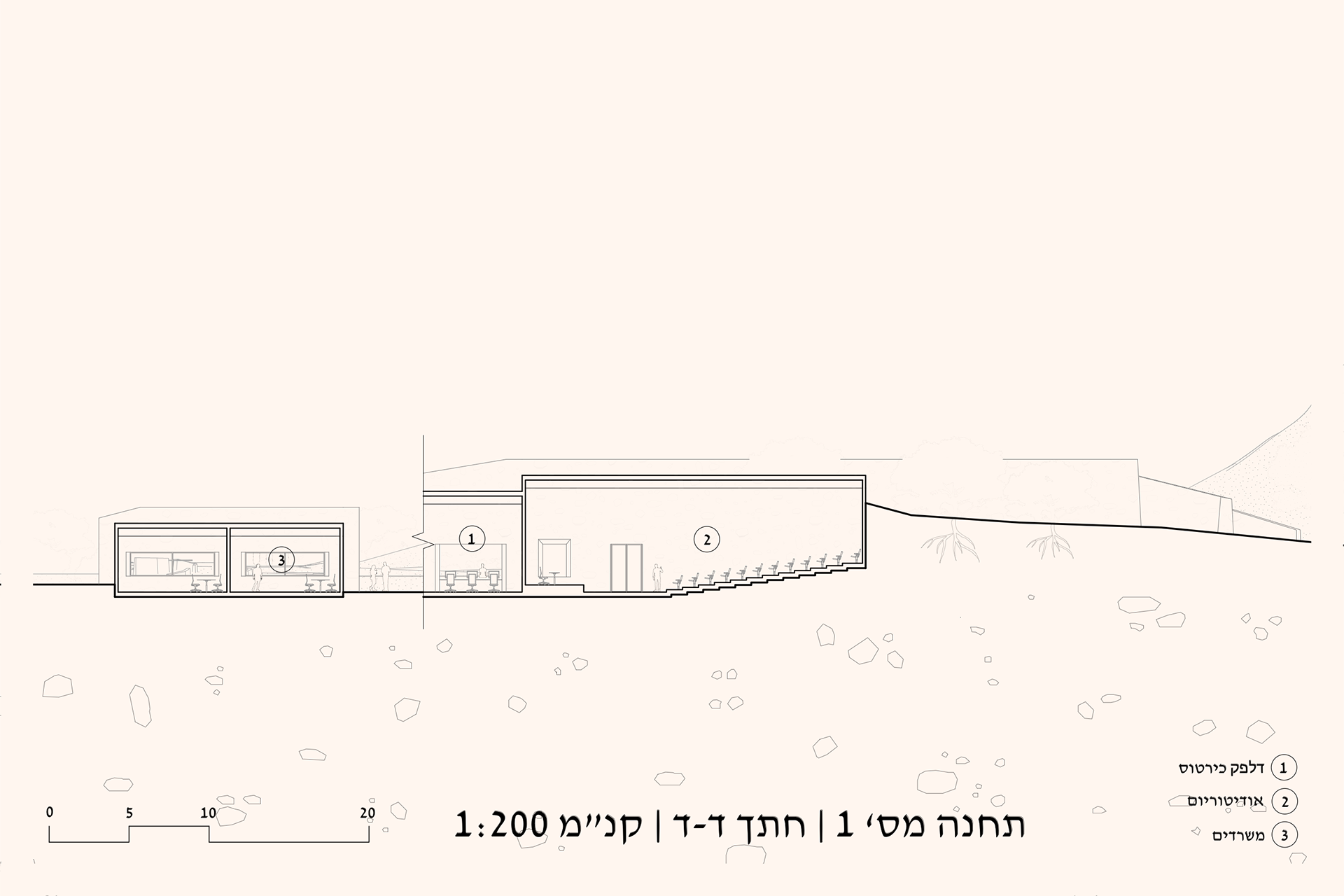
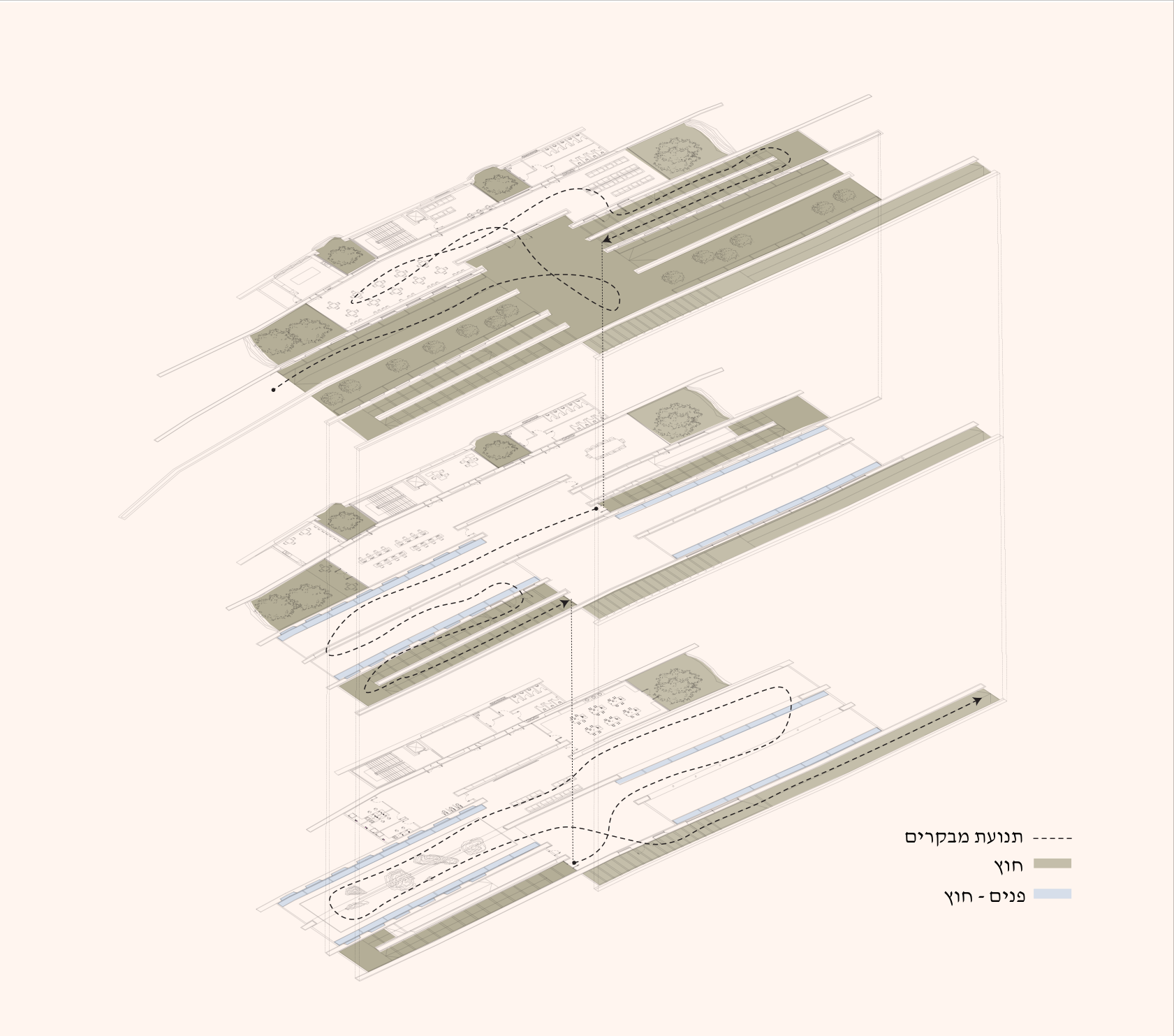
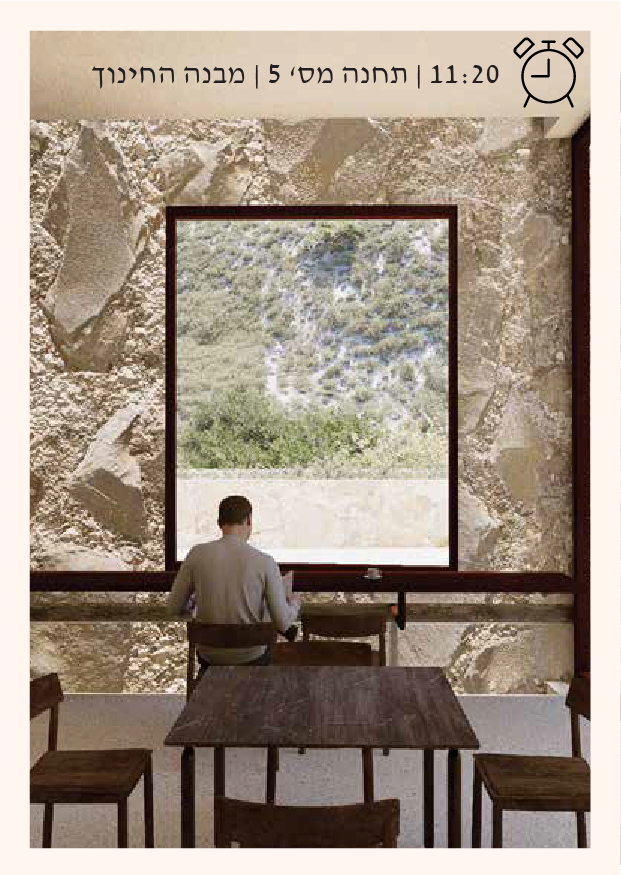
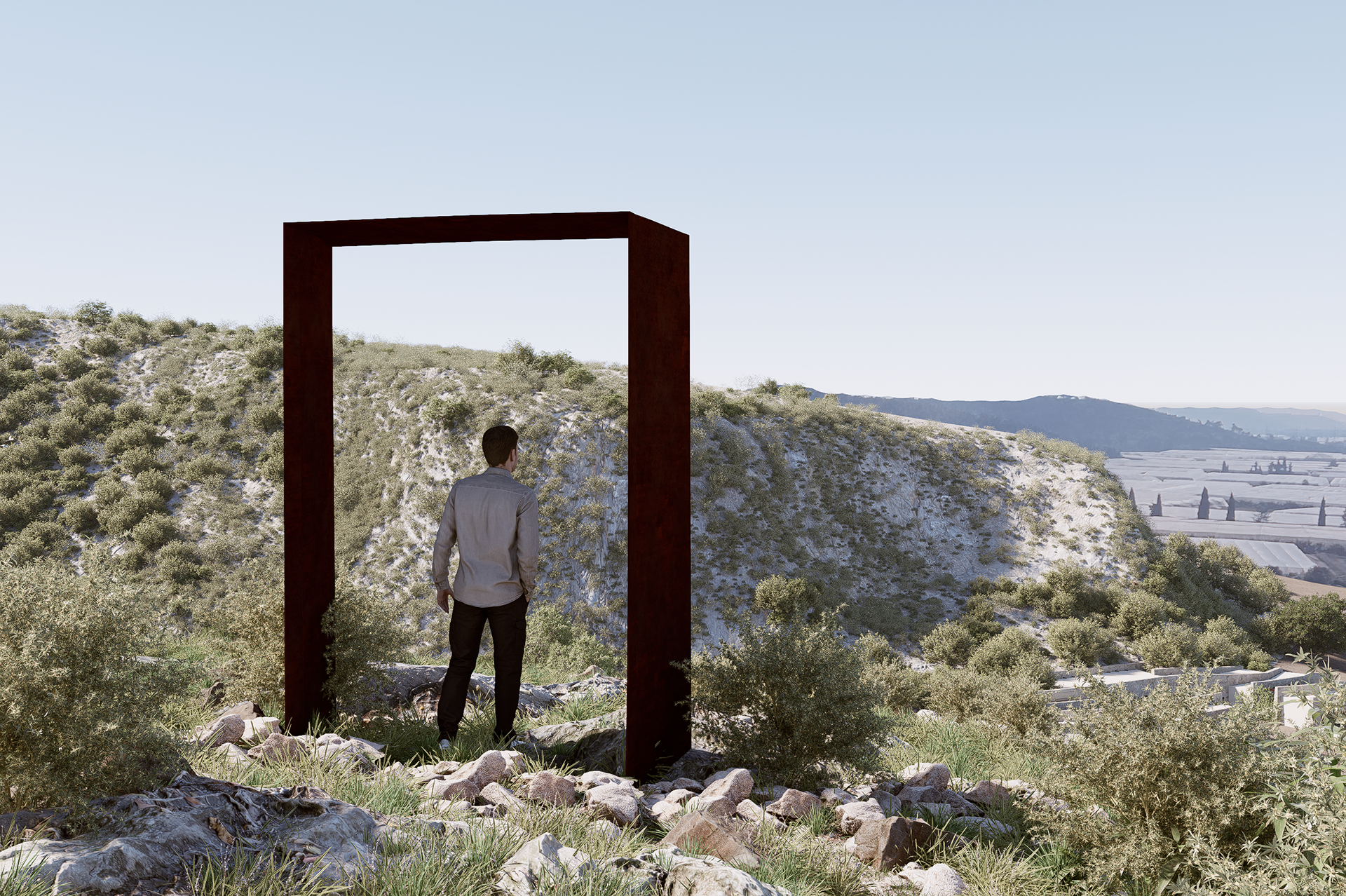
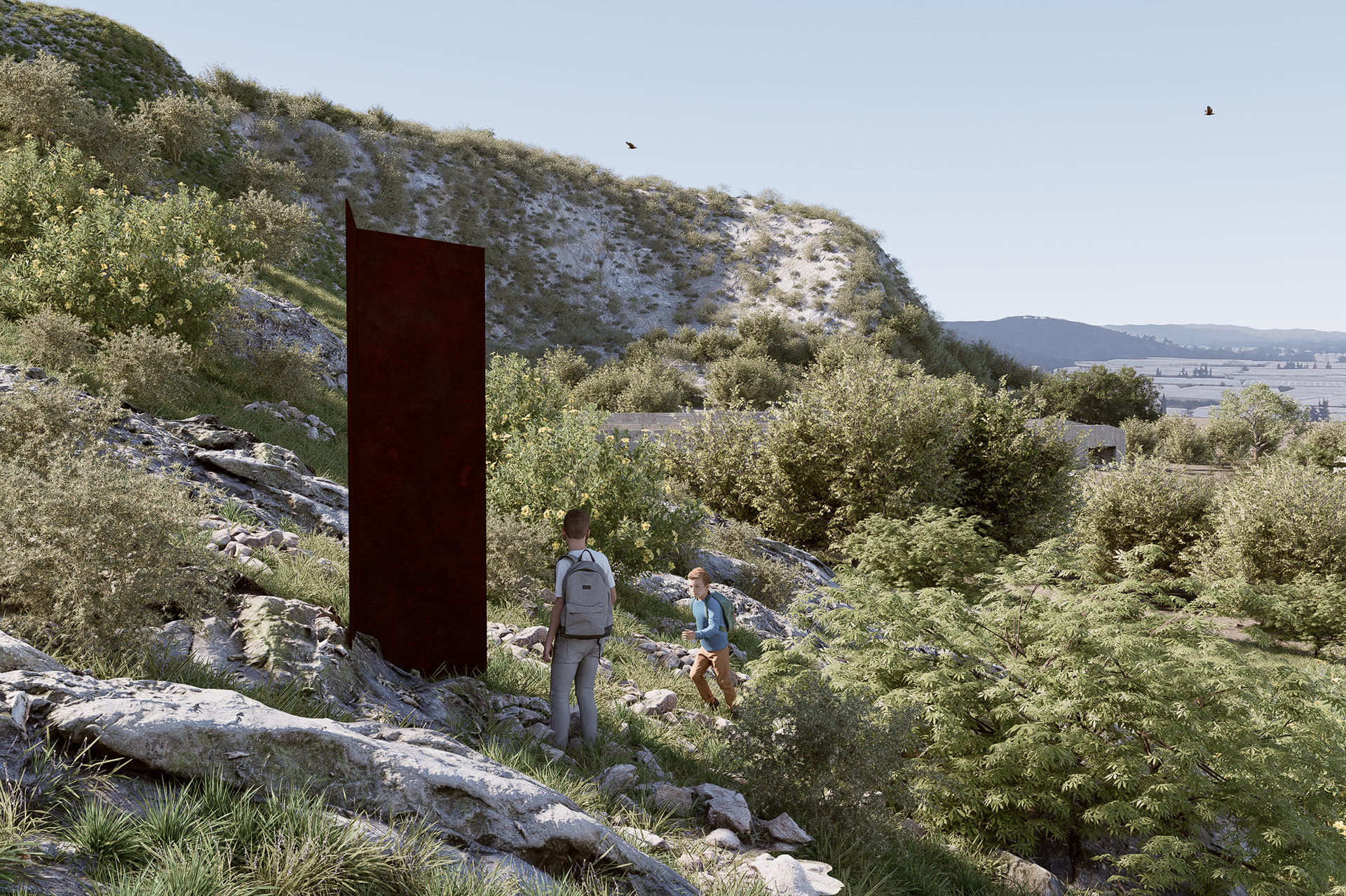
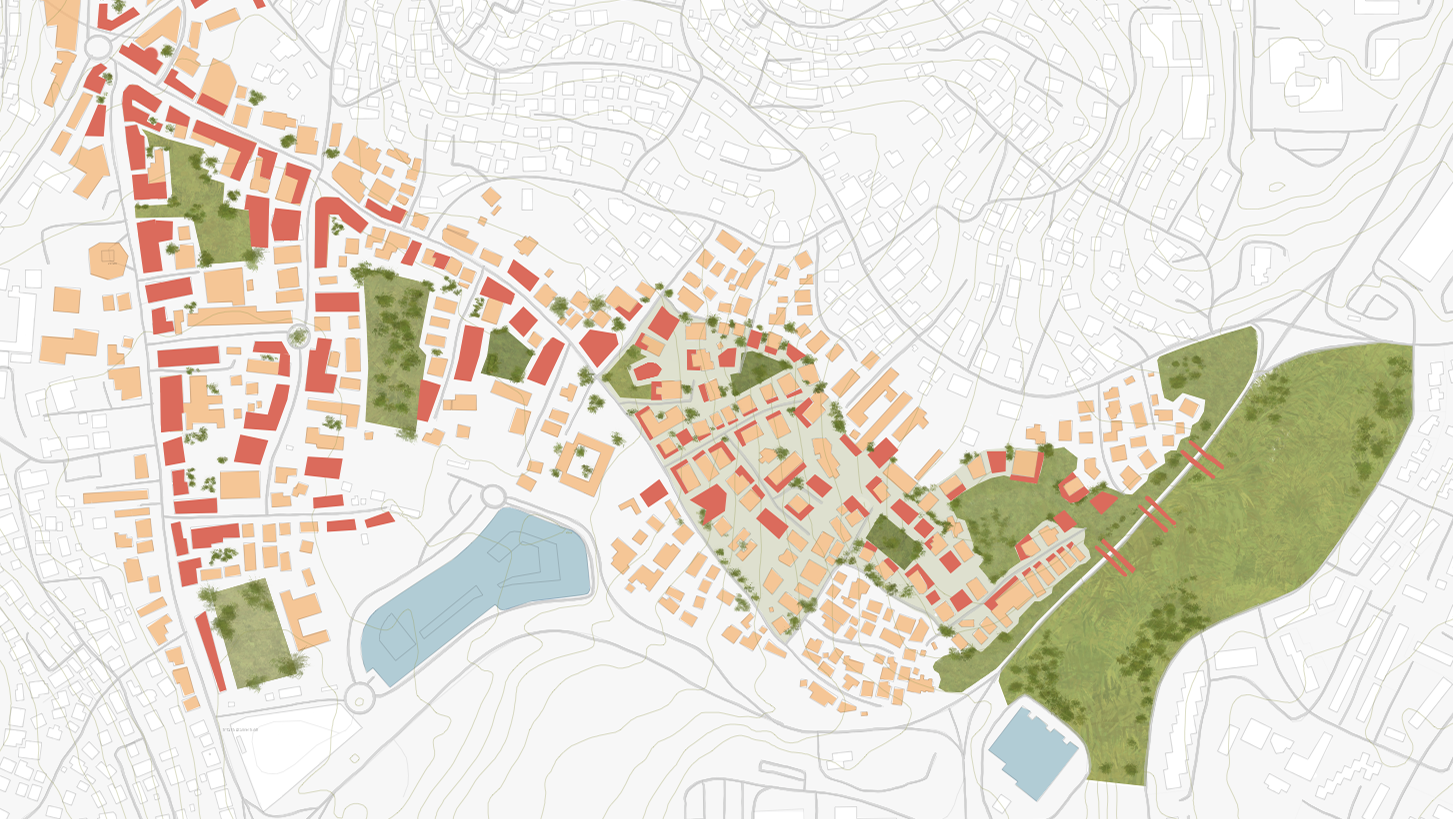
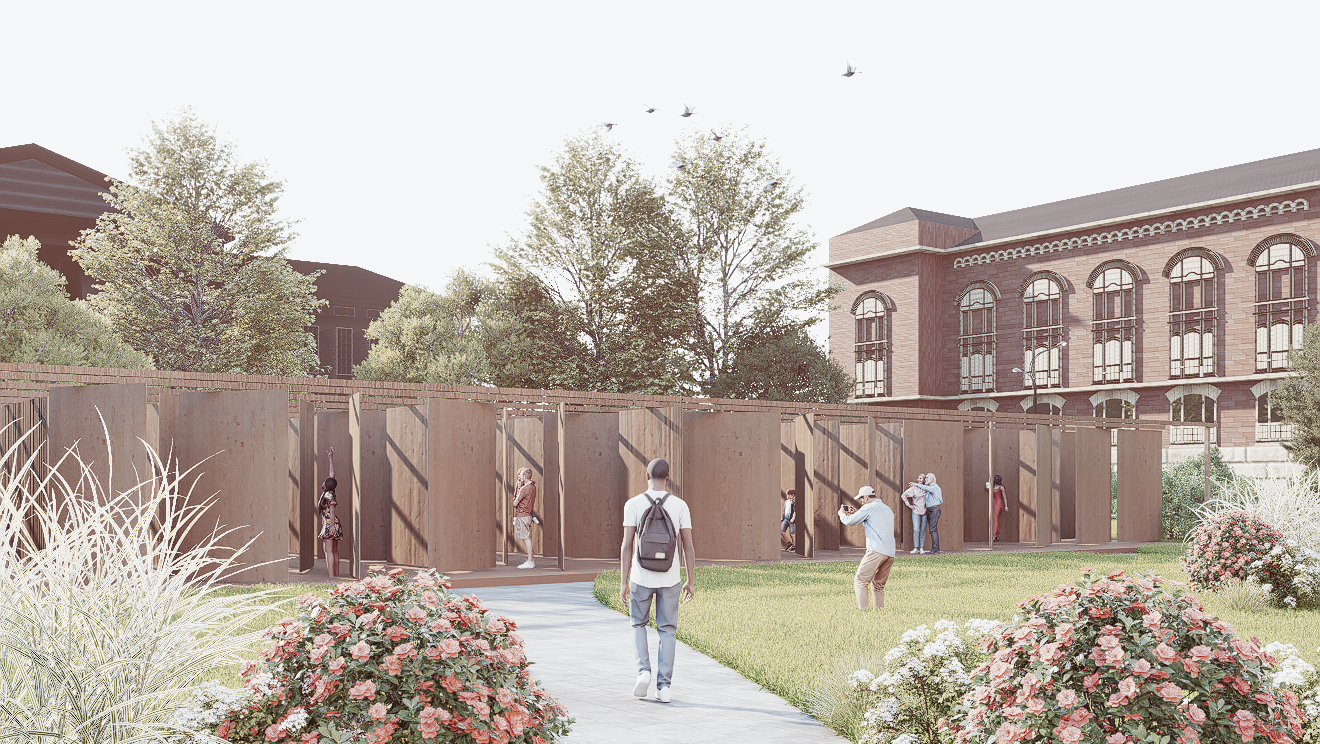
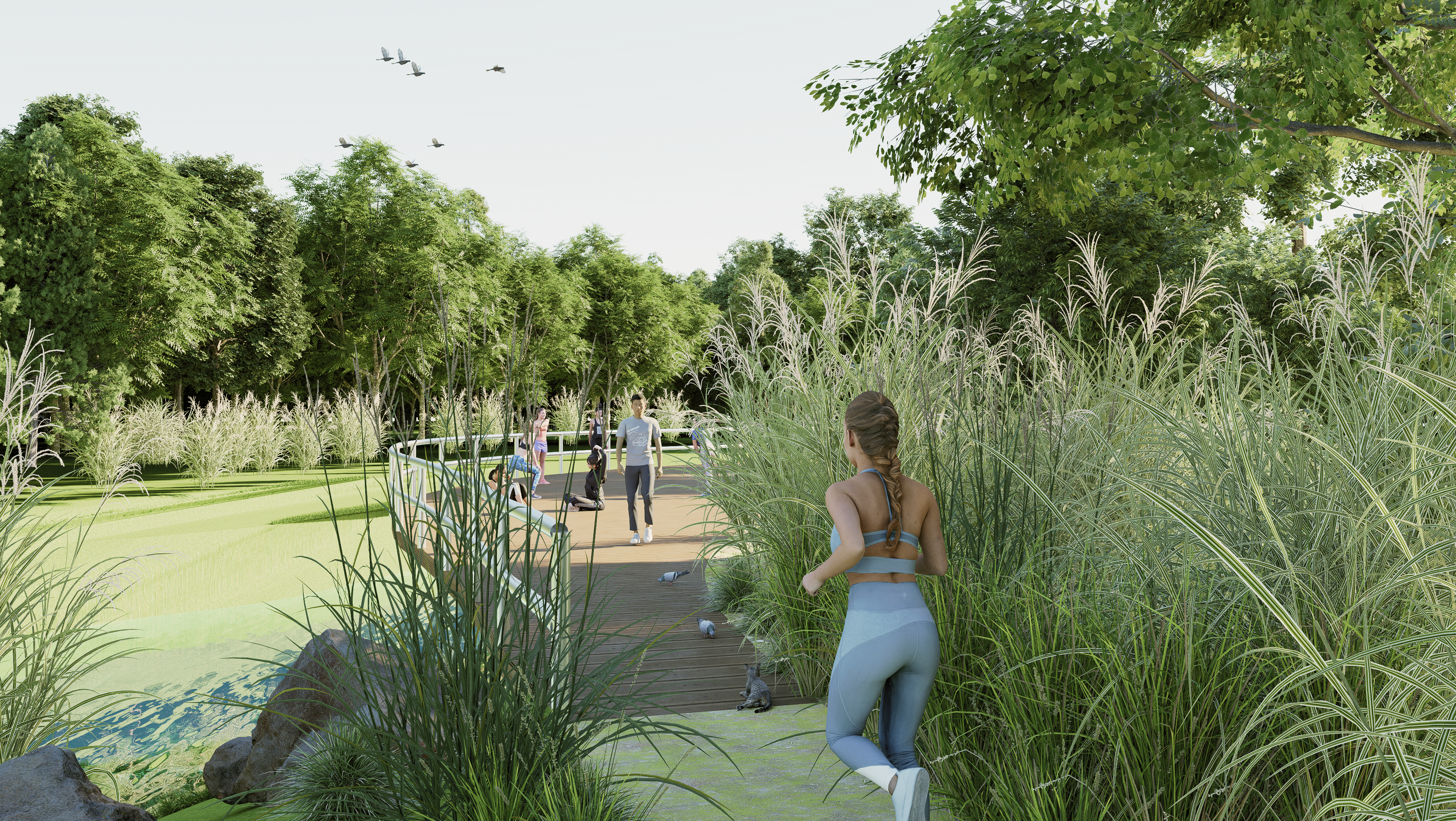
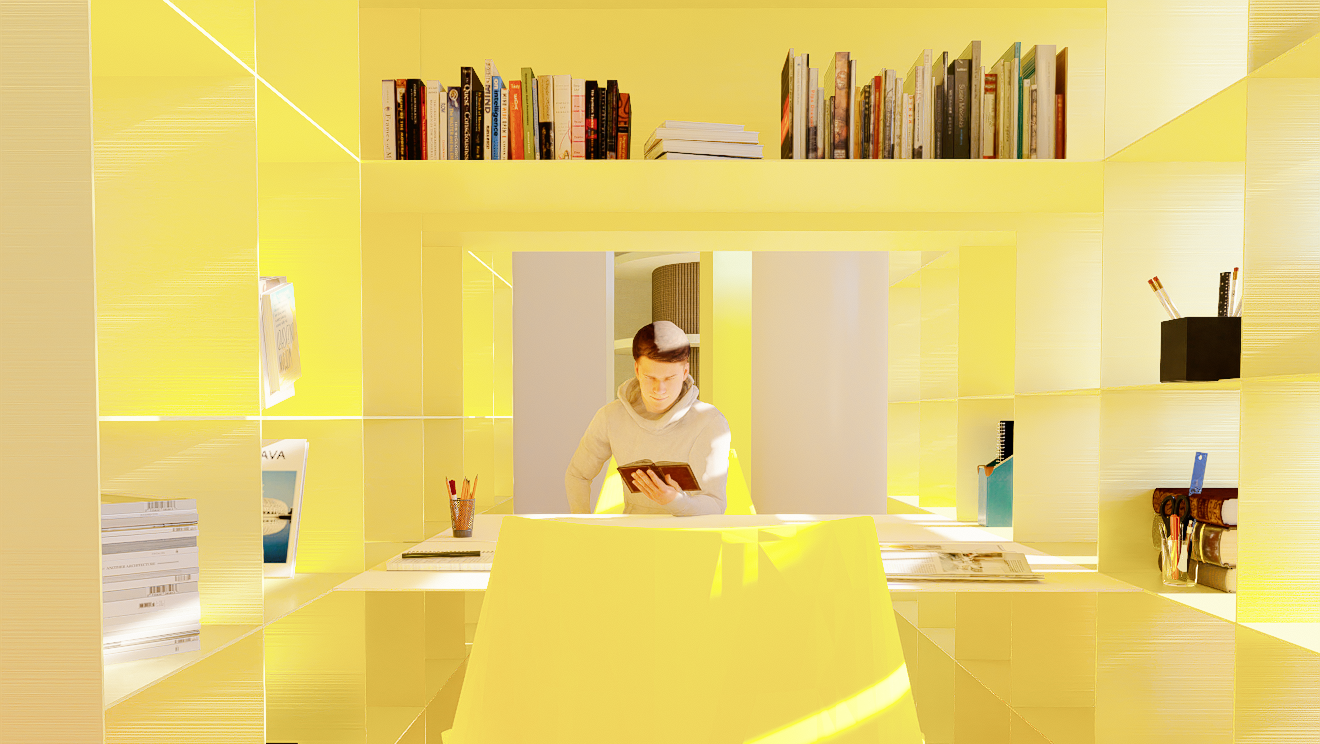
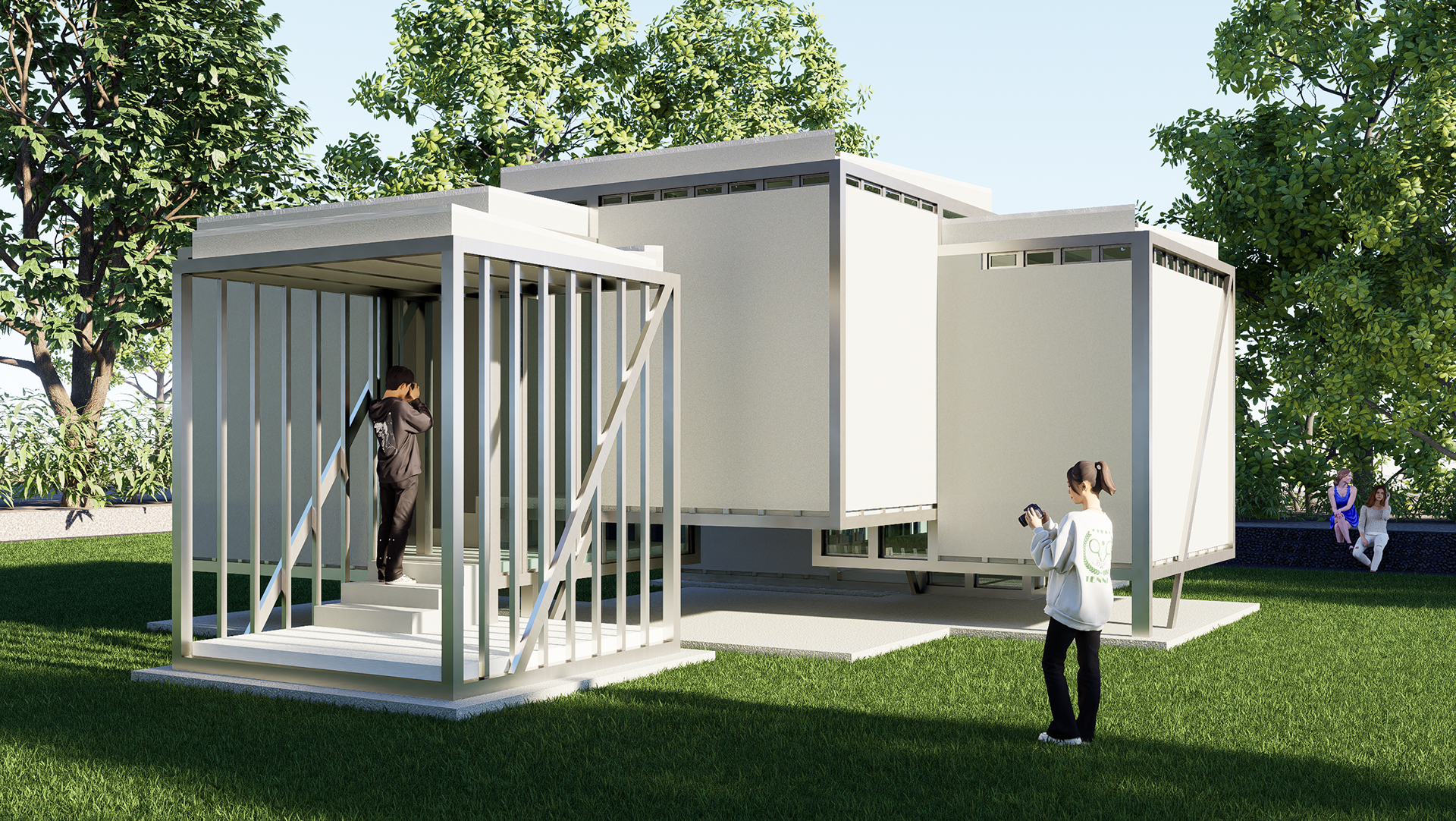
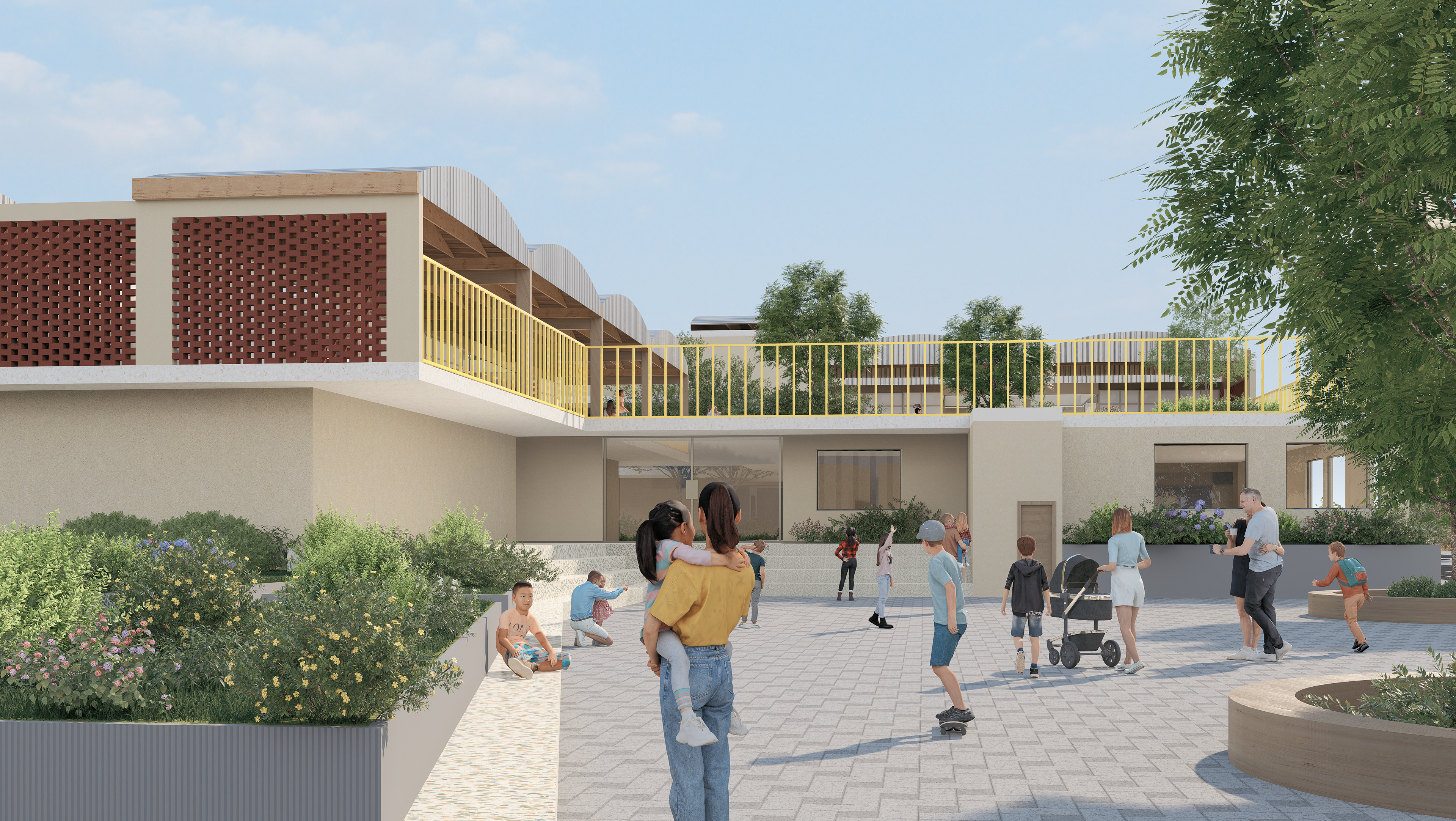
The project proposes turning the Nahal Mearot site into a “walking museum.” Not a static white box, but a path where knowledge is absorbed through the body: walking, breathing, light, sound, and the touch of stone. Its starting point is phenomenological: to awaken full presence and attentiveness, to break ingrained habits of automatic perception, and to return the experience to a direct encounter with place and time. Among the guiding phenomenological tools is a shifting template, a recurring grammar of inside–outside–inside–outside that appears again and again, yet takes a different form each time. In this way a consistent language emerges that manages to “use the template to break the template”: the repetition provides orientation, while the subtle change sharpens awareness. The intervention is minimal and precise—the minimum necessary for maximum experience—so that nature, the caves, and time can act. The content of the path is woven from three interlacing threads: the geology and biology of Mount Carmel; the archaeology and emergence of humankind; and the living landscape as continuous testimony. The path teaches through the experience itself—compression and release, framing, light, and traces of time—seeking to create a profound connection between person, landscape, and history; not mere information, but a bodily and mental memory.
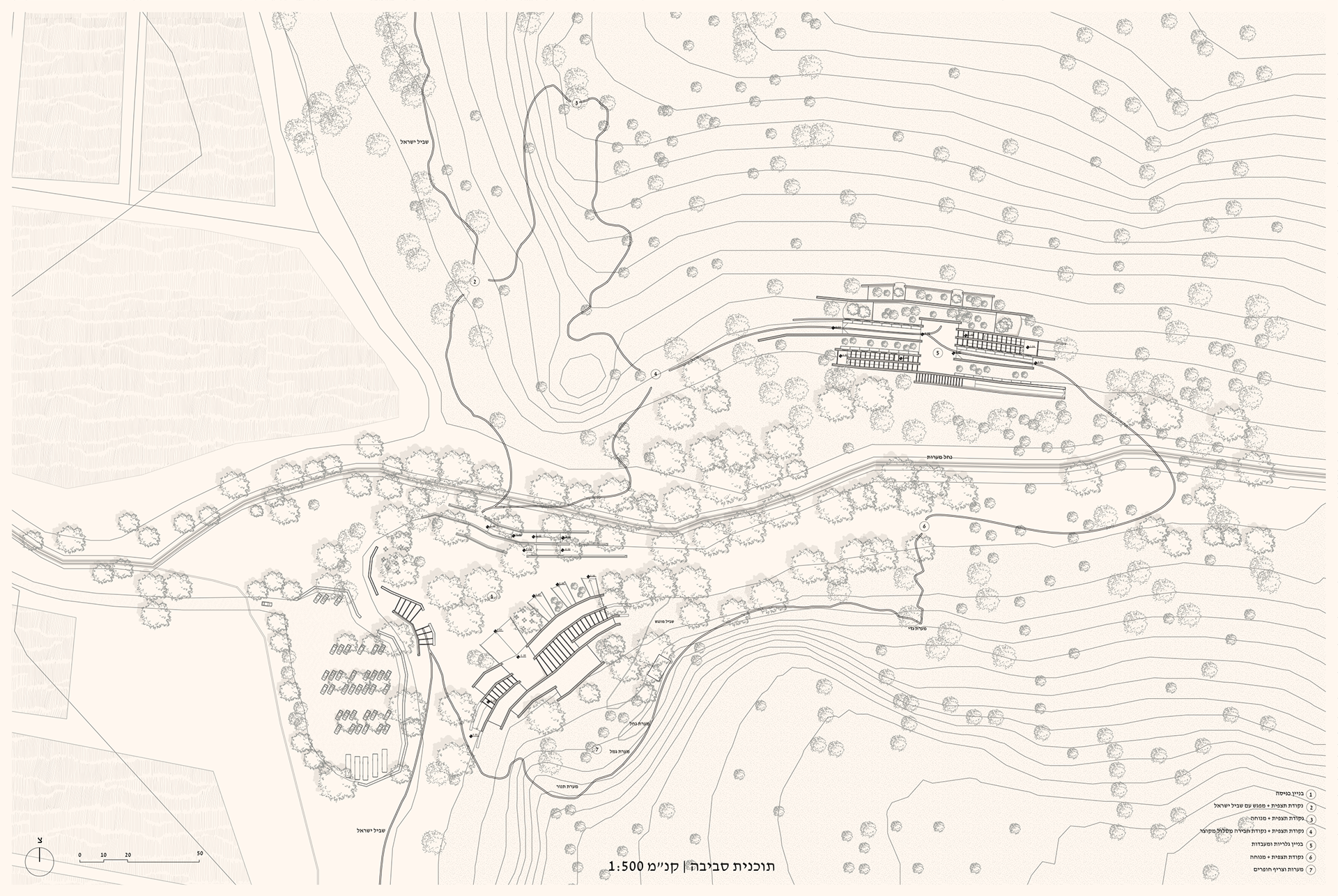
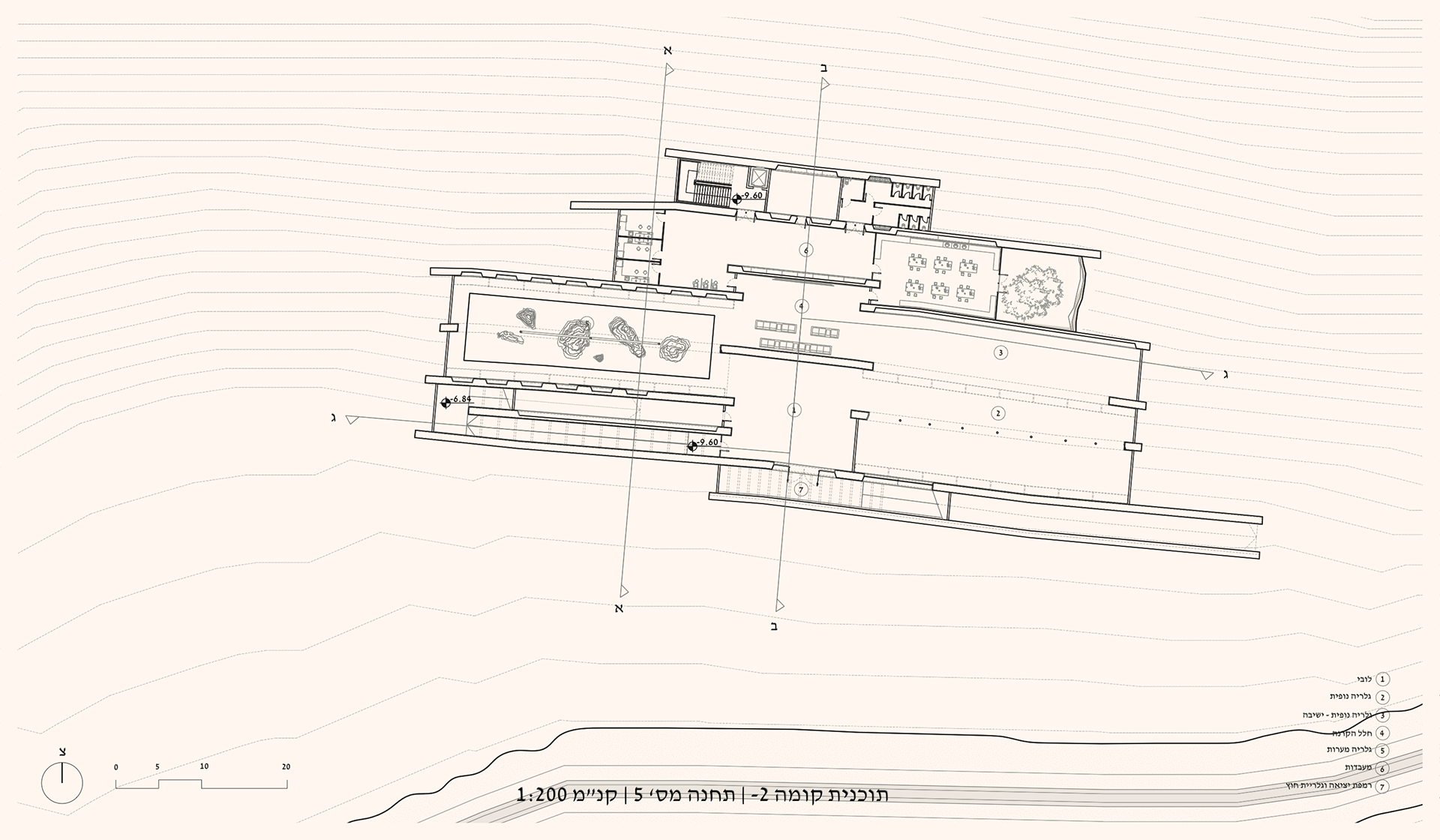
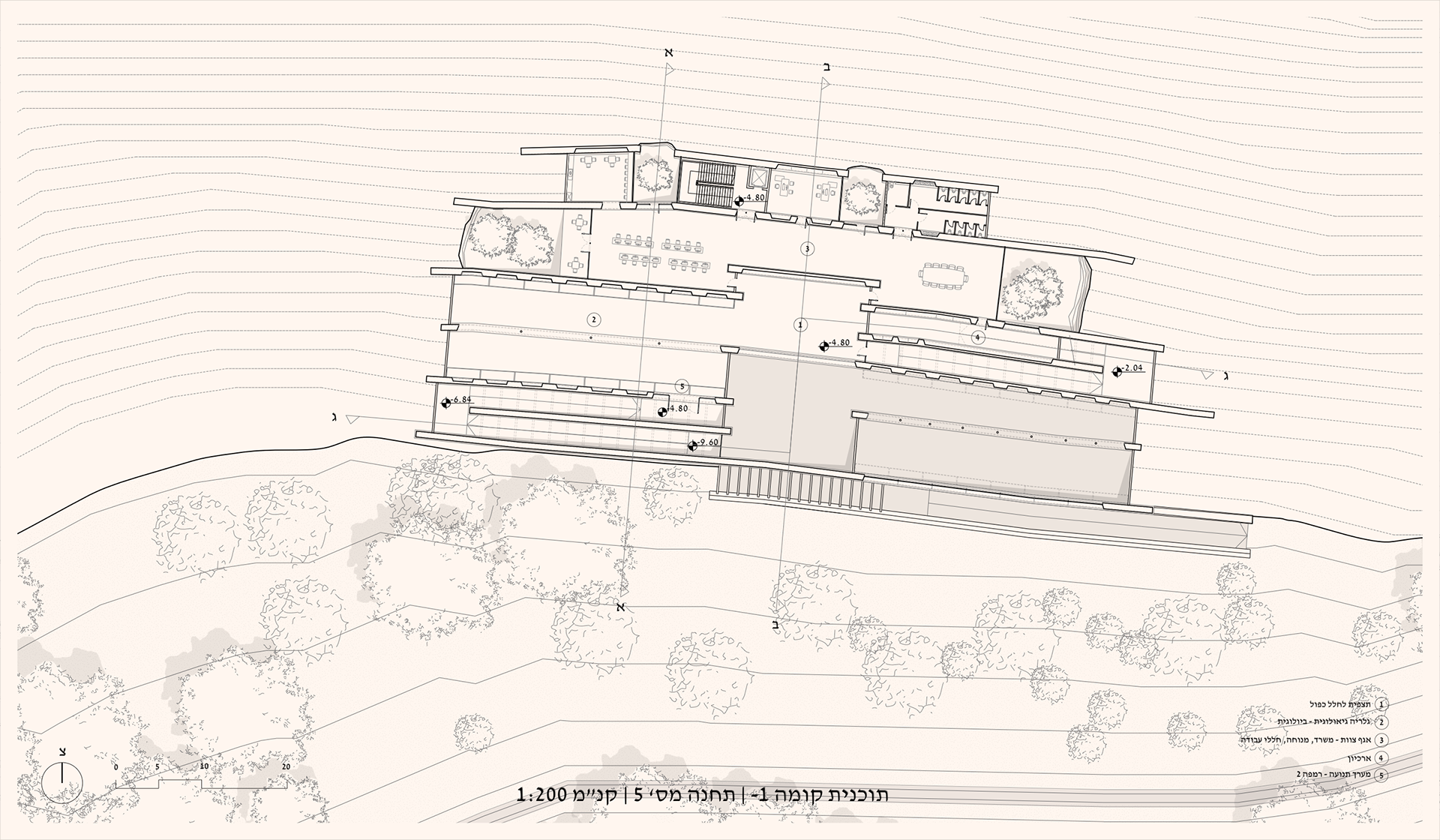
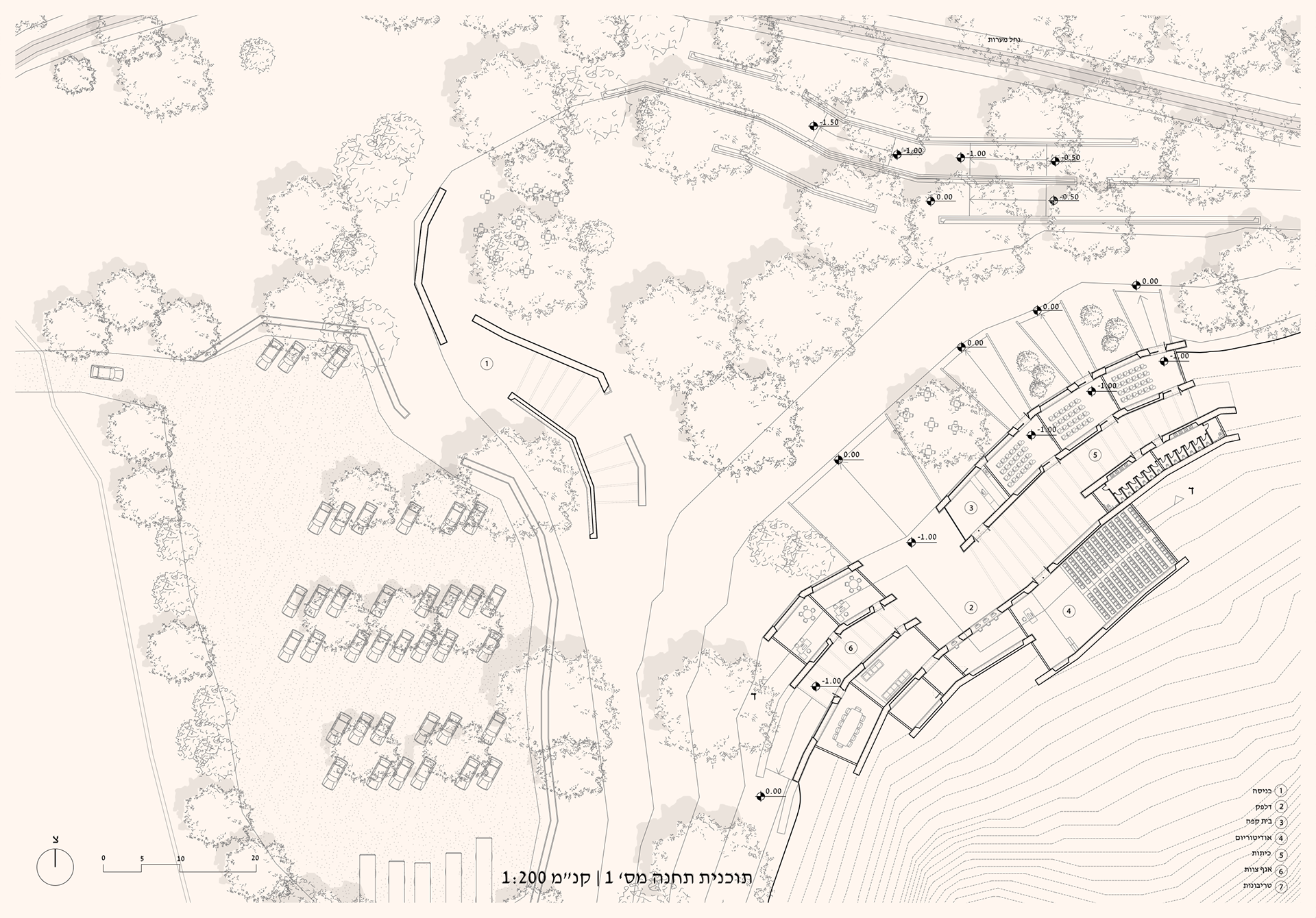
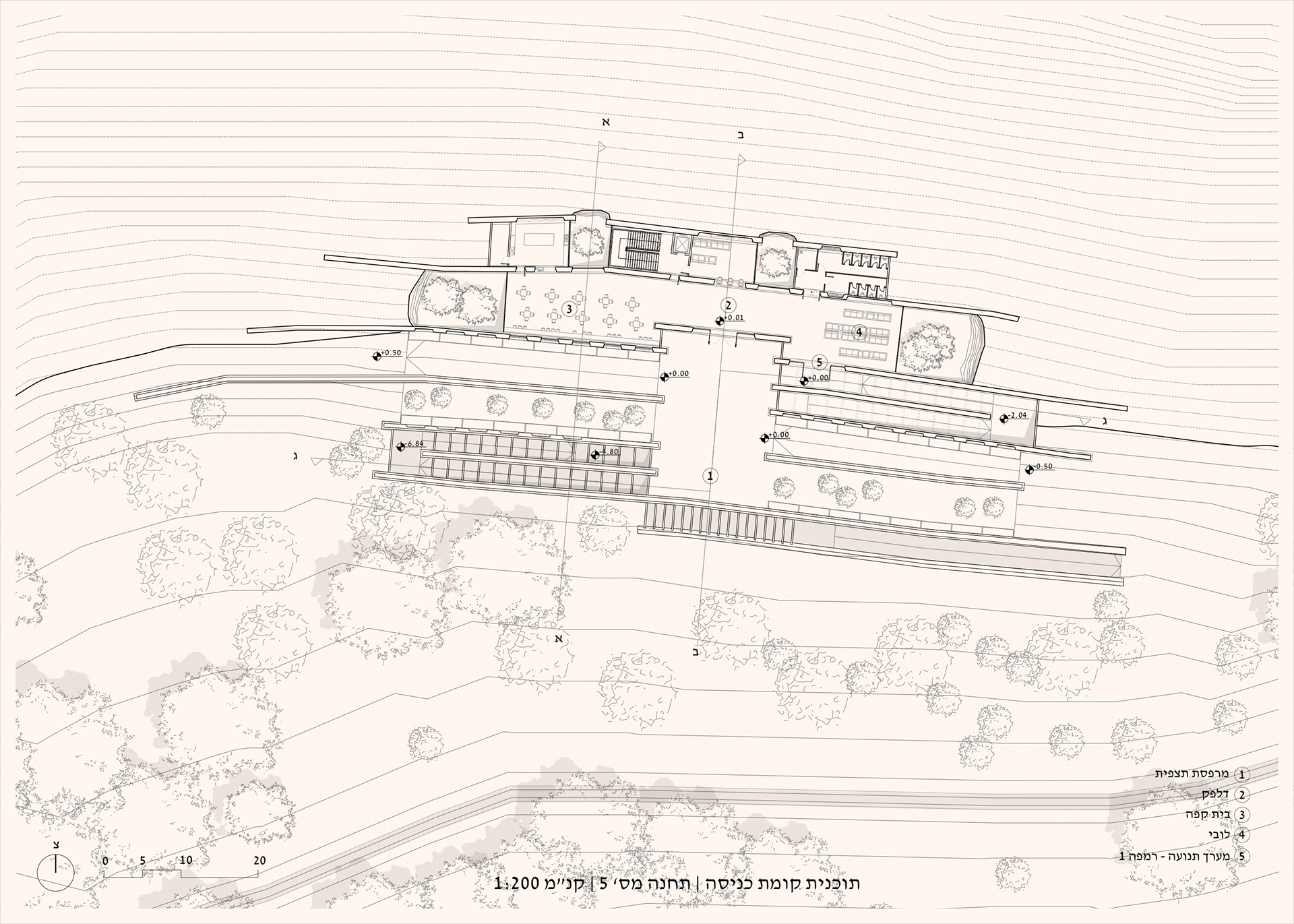
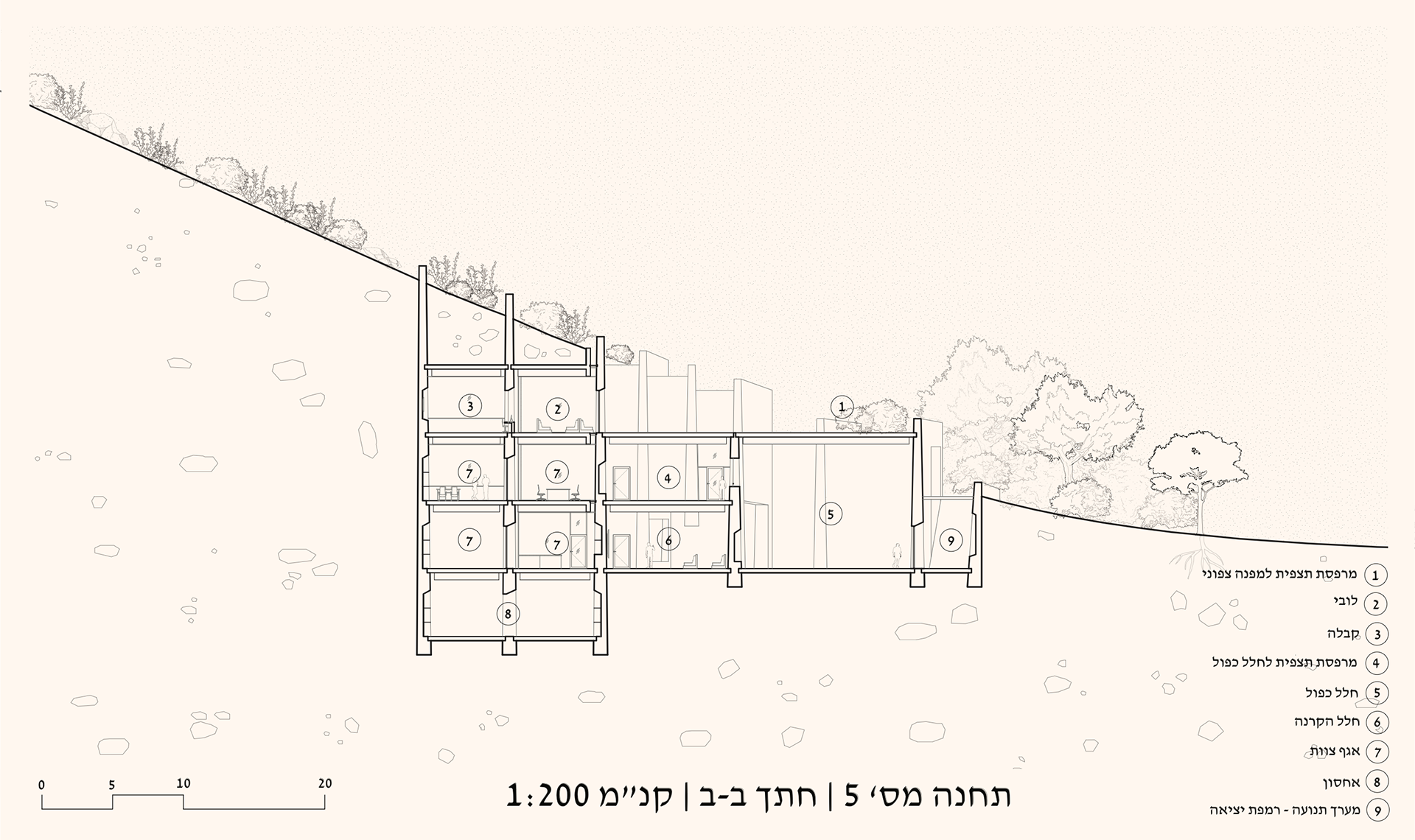
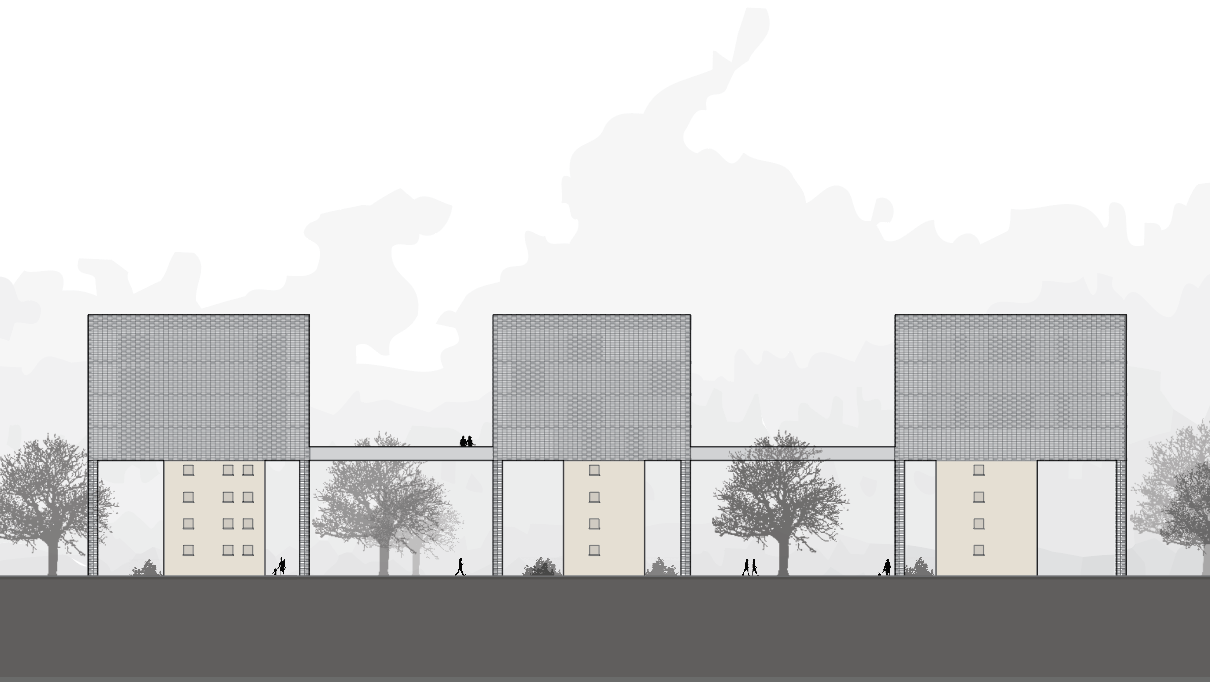
תחנה מס' 5 - מבנה גלריות ומעבדות - קומת כניסה - קנ"מ 1:200